
Top 5 Fleet Management Trends for 2026
The fleet management market is fast-moving - especially in the current age of EV adoption, AI-integration, and an increasingly technologically advanced vehicle parc.
sopp+sopp have worked with some of the UK’s best-known fleet operators, commercial insurers, and leasing companies for more than 20 years. We help our customers keep their vehicles moving, through intelligent fleet management technologies, market-leading vehicle repair centres, and our end-to-end accident & claims management solutions.
Here, we explore some of the key trends and innovations likely to shape the fleet industry in 2026 - from advancements in vehicle technology, to the increasing appetite for AI-powered solutions.
What changes did 2025 bring for the fleet industry?

“2025 was a pivotal year for the fleet industry. We saw technology move from being a ‘nice to have’ to an operational necessity, with fleets under increasing pressure to improve uptime, control costs and manage risk in a far more data-driven way.
Greater connectivity, the rise of AI, and the acceleration of electrification fundamentally changed how fleets think about vehicle condition, safety and claims.
For us, it reinforced the importance of staying close to our customers, investing in intelligent solutions, and helping fleets navigate this shift with confidence.
The pace of change isn’t slowing – and 2025 set the foundation for a smarter, more proactive fleet landscape going forward.”
Callum Langan, Managing Director, sopp+sopp
What innovations will shape the fleet industry in 2026?
As the fleet industry looks ahead to 2026, innovation is set to play a defining role in how vehicles are managed, maintained and operated.
Rapid advances in connectivity, artificial intelligence, and vehicle technology are reshaping everything from safety and maintenance to claims and electrification.
For UK commercial fleets, the question is no longer whether to adopt new technology – but which innovations will have the greatest impact on efficiency and long-term success.
#1 - Connected vehicles & the IoT (Internet of Things)

The Internet of Things (IoT) refers to a network of internet-connected devices that collect and exchange data in real time, such as:
GPS Trackers
Telematics Devices
Sensors
Dashcams
Vehicle Systems
In recent years, the IoT has become a cornerstone of smarter, more efficient operations within the commercial fleet industry, enabling fleets to move from reactive decision-making to data-driven, automated vehicle management.
Internet-connected devices installed in vehicles allow continuous data to be collected on vehicle location, driver behaviour, fuel usage, and engine health. Fleet managers can then access a centralised, real-time view of their entire fleet through dashboards and mobile apps, turning raw data into actionable insights.
For UK fleet operators, the benefits are significant. Smart telematics enable predictive maintenance by identifying potential mechanical issues and component wear before they cause breakdowns, reducing downtime, and controlling repair costs.
Real-time vehicle tracking improves route optimisation and delivery performance, while monitoring driver behaviour (such as harsh braking or speeding) supports safer driving and lowers risk.
Connected vehicles and the IoT look set to play an even bigger role in shaping the fleet industry in 2026. As manufacturer-fitted data-recording devices begin to become standard, fleets are able to gain deeper insights from day one, without the need for additional aftermarket hardware.
Improvements in data analytics and accuracy will likely further enhance predictive maintenance by allowing fleet operators a real-time, centralised view of their entire fleet, enabling faster decision-making and improved efficiency.
Ultimately, data-tracking devices appear certain to continue facilitating a more intelligent, sustainable and resilient UK fleet sector, where visibility, efficiency and safety are built into every journey.
#2 - Advancements in AI-powered predictive maintenance
AI-powered predictive maintenance is rapidly becoming a gamechanger for commercial fleet operators, helping them reduce downtime, control costs, and extend vehicle lifecycles. By enhancing traditional inspection and maintenance processes with AI, fleets can now identify issues earlier and make data-driven decisions on when to intervene.
One way this is achieved is through AI-powered vehicle inspections. Using image recognition, AI systems can automatically detect vehicle damage, wear, and compliance issues (such as bodywork damage and tyre condition) without relying solely on manual checks. This creates a consistent, objective record of vehicle condition and significantly reduces human error such as missed defects or inconsistent reporting.
These insights become far more powerful when combined with AI-led data analysis that brings together repair history, vehicle usage, and condition reports to identify patterns that signal upcoming failures or maintenance needs.
For example: It may flag that a vehicle with high milage, repeated minor defects and intensive usage is likely to require servicing sooner, enabling fleets to schedule maintenance proactively rather than reacting to breakdowns.
To unlock this capability, fleets need to connect data across inspection processes, servicing and maintenance records, and repair networks, creating a single, unified platform.
AI-powered predictive maintenance is set to continue to play a central role in shaping the UK fleet industry throughout 2026. As data connectivity improves and AI models become more sophisticated, fleets will likely move closer to fully automated maintenance planning – reducing vehicle off-road time, improving compliance, and supporting the transition to mixed and electric fleets. The result will be safer, more reliable, and more cost-efficient fleet operations built on intelligence rather than intuition.
Discover how FleetScout’s automated vehicle inspections are fueling AI-powered predictive maintenance in the UK’s largest fleets.
#3 - Driver behaviour monitoring & predictive safety technology
Driver behaviour monitoring is a significant component of modern fleet safety strategies, helping fleets reduce risk, improve compliance, and protect both drivers and assets. By combining telematics data with emerging AI-powered safety technologies, fleets can gain a deeper understanding of how vehicles are driven and how risks develop in real time.
Today, fleets commonly monitor driver behaviour through telematics, capturing data on speeding, harsh breaking, rapid acceleration, cornering and idling. Increasingly, this is being enhanced by AI-powered in-cab cameras and sensors that provide greater context around driving events. These systems can assess driver alertness, detect signs of distraction or fatigue, and analyse how drivers respond to road conditions, traffic and potential hazards.
By bringing these data points together, fleet operators can build a clearer picture of driver and vehicle risk profiles.
This insight enables fleets to move from blanket safety policies to targeted training interventions and proactive safety measures. Drivers can receive personalised coaching based on real driving data, while managers can reinforce consistent, safe driving standards across the fleet. Over time, this approach not only reduces incident rates and insurance costs but also improves driver engagement and wellbeing.
In 2026, it is likely that commercial fleets will place even greater emphasis on driver behaviour monitoring as predictive safety technologies continue to mature.
#4 - Automated incident reporting & fraud identification

Modern fleets increasingly use smart telematics and vehicle-mounted cameras to detect incidents as they happen. Sudden impacts, harsh breaking events, or unusual vehicle movements can automatically trigger incident alerts, while dashcams and external cameras capture visual evidence in real time. This immediate visibility allows fleet managers to respond faster, support drivers on the road, and begin the claims process without delay.
Advanced systems also use Automatic Number Plate Recognition (ANPR) to identify third-party vehicles involved in an incident. By capturing registration details at the point of impact, fleets can streamline third-party identification, accelerate liability assessments and reduce the risk of incomplete or inaccurate information – one of the most common causes of claim delays.
AI plays an increasingly important role in triaging claims and identifying potential fraud. By analysing incident data, historical claims, vehicle damage patterns and behavioural indicators, AI models can flag anomalies or inconsistencies that may suggest exaggerated or fraudulent claims. This enables fleet operators and insurers to prioritise genuine cases while escalating higher-risk claims for further review.
AI-driven analysis can also recommend the best next steps (such as whether to repair, replace or escalate a claim) based on cost, vehicle condition, downtime impact and historical outcomes. This helps fleets make faster, more consistent decisions that balance operational continuity with financial control.
It is expected that tech-assisted incident reporting and fraud identification will become the standard across the UK fleet industry. As AI and connected vehicle technologies mature, claims handling is set to become faster, more transparent and increasingly automated – reducing costs, minimising disputes and improving outcomes for fleet operators, drivers and insurers alike.
Looking ahead to 2026, automated incident reporting and fraud identification are set to become standard across the UK fleet industry. As AI and connected vehicle technologies mature, claims handling is set to become faster, more transparent and increasingly automated – reducing costs, minimising disputes and improving outcomes for fleet operators, drivers and insurers alike.
#5 - More electrification beyond the last mile
Electrification within commercial fleets is moving rapidly beyond short routes and last-mile deliveries. While early EV adoption focused on vans operating predictable, low-range journeys, fleets are now increasingly exploring electric solutions for long-haul and specialist operations, driven by tightening emissions regulations, rising fuel costs and advances in vehicle technology.
For many fleets, the next challenge is understanding the true cost and operational implications of electrifying longer journeys. This requires access to robust market and vehicle performance data, including real-world range, charging availability, energy costs, and total cost of ownership. Fleets must carefully assess whether existing routes need to be redesigned around charging infrastructure or whether newer long-range EVs can support current duty cycles without disruption.
Electrification also introduces new considerations around repair and maintenance costs, particularly the long-term health and degradation of high-voltage batteries. While EVs typically have fewer moving parts than internal combustion vehicles, battery condition, replacement costs and warranty coverage become critical factors in lifecycle planning. Fleets must evaluate how reduced or fluctuating range over time could impact route planning, vehicle utilisation and residual values.
At the same time, the market for electric commercial vehicles is expanding rapidly, including heavier vans, electric HGVs, and specialist builds such as refrigerated or adapted vehicles. Understanding the capabilities, limitations and charging requirements of the latest makes and models is essential for fleets looking to electrify beyond the last mile without compromising optimal performance.
Looking ahead to 2026 and beyond, successful electrification will depend not only on vehicle adoption but on preparing the wider supply chain. Fleets will need to increasingly work with repairers, manufacturers and suppliers to ensure skills, tooling and infrastructure are in place to support the next generation of electric assets. As technology matures, electrification beyond the last mile will become a practical, scalable reality – reshaping the UK commercial fleet industry around cleaner, more-driven and future-ready operations.
Looking ahead: 2026 at sopp+sopp

“Our focus has always been on listening closely to our customers and understanding the real challenges they face day to day. By doing that, we’re able to anticipate where the industry is heading and develop solutions that genuinely support fleets as they evolve.
As new technologies, vehicle types and operating models emerge, our priority is to grow alongside our clients and continue delivering practical, future-ready solutions that add measurable value.”
Chris Beeby, Business Development Director, sopp+sopp
Equipping fleets for the next generation of vehicles
As the commercial fleet industry evolves, sopp+sopp is focused on ensuring fleets are fully prepared for the next generation of vehicles.
This starts with supporting fleet-electrification strategies through better visibility of cost and performance. We aim to help fleets understand the true cost of ownership for electric and mixed fleets by supplying market-led data across different makes and models, including repair costs, parts availability and long-term maintenance considerations. These insights will allow fleet operators to make informed decisions – balancing sustainability goals with operational and financial realities.
As EV adoption grows, so does the need for EV-capable repair and maintenance support. Through our repair network, we are investing in the latest repair methodologies, specialist equipment, and ongoing technician training to ensure vehicles are repaired safely, compliantly, and efficiently. Fleets can be confident that their electric assets can be supported at scale, minimising downtime and protecting residual value throughout the vehicle lifecycle.
We also maintain strong group relationships with OEMs, enabling us to stay ahead of evolving vehicle technologies and repair requirements. By working closely with manufacturers, we can gain early insight into new vehicle designs, materials and systems, ensuring our repair standards, processes and guidance align with the latest OEM-approved methods.
Integrating AI for smarter claims management

As we look ahead to 2026, AI will be central to how we deliver faster, more accurate, and more resilient claims outcomes for fleets.
Crucial to this approach is SafetyNet, our AI-powered FNOL validation tool. SafetyNet, uses advanced reasoning and historic claims data to assess claim accuracy, causation, liability and early indicators of fraud at the earliest possible stage. By analysing information at the point of notification, fleets gain immediate clarity on whether a claim is legitimate, incomplete or potentially high-risk, reducing unnecessary delays and preventing avoidable costs from entering the system.
SafetyNet highlights inconsistencies and fraud warning signs before claims progress, enabling fleets and claims teams to prioritise genuine incidents while escalating suspicious cases for further review.
AI also enables intelligent claim triaging, categorising claims by complexity and risk, and suggesting the best next steps, whether that’s fast-tracking low-risk cases or escalating more complex incidents for specialist handling. The result is a smarter, more proactive claims management approach that delivers better outcomes for fleets and insurers alike.
Reducing the cost & complexity of third-party claims
Reducing third-party claim costs will be a growing focus for sopp+sopp in 2026, particularly as claim volumes and repair costs continue to rise.
Our smart third-party capture process simplifies and accelerates early engagement, helping control outcomes from the very first interaction.
We provide a fully digital journey for third parties, allowing them to scan a link from the driver’s phone or bump card and upload their details directly into our system. This enables us to manage their repair end-to-end, avoiding third parties sourcing their own repairs and recharging fleets at inflated rates.
For non-fault incidents, our in-house Uninsured Loss Recovery (ULR) solution further protects fleet customers by recovering costs directly from at-fault parties, reducing financial exposure while removing complexity from the claims process. Our solution has reclaimed more than £2.6 million for our fleet customers in the past 12 months alone.
Helping fleets achieve proactive maintenance
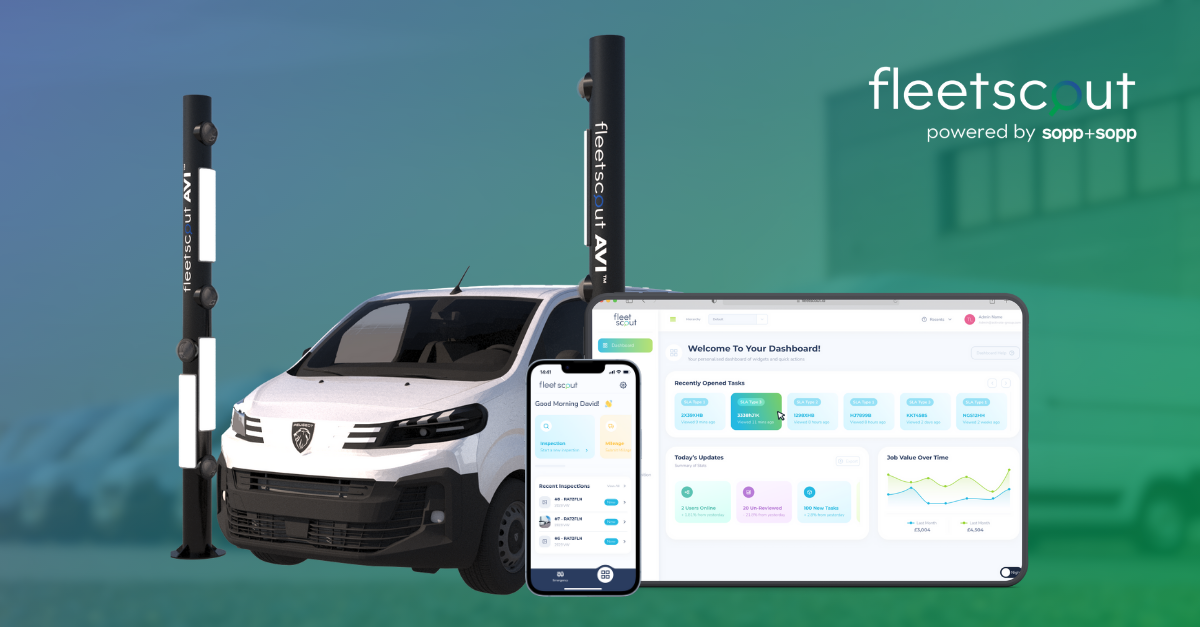
Proactive maintenance is likely to continue to be a defining advantage for high-performing fleets in 2026. sopp+sopp is leading this shift through intelligent automation and AI-driven condition management.
At the heart of our approach is FleetScout, our AI-powered automated vehicle inspection solution. FleetScout AVI uses high-spec cameras and advanced visual AI to scan vehicles as they enter and exit sites, automatically identifying new damage, defects and compliance issues. Every inspection is captured and compiled within FleetScout Central, our single, centralised platform for condition and asset management.
This continuous visibility enables smarter condition management and proactive repairs. Rather than waiting for scheduled maintenance or breakdowns, fleet operators receive instant notifications when issues are detected allowing them to instruct repairers directly from FleetScout Central. By connecting inspection data with maintenance workflows, fleets can address problems earlier, before they escalate into costly repairs or vehicle off-road events.
Our solution supports fleets at every stage:
Inspect: FleetScout AVI’s automated visual AI delivers accurate 360-degree vehicle scans, while FleetScout Walkaround guides drivers through simple, DVSA-compliant daily checks.
Detect: From dents and scratches to punctures, glass damage, structural instability and compliance issues, FleetScout AVI identifies a wide range of defects with speed and precision.
Take Action: Full condition reports are available within minutes, with integrated escalation to compliance teams, stakeholders and repair partners within FleetScout Central.
Optimise: FleetScout Central provides a complete, fleet-wide view of vehicle condition and integrates seamlessly via API, connecting engineering teams, suppliers and partners in real time.
By identifying issues earlier and avoiding unnecessary parts replacements or delayed interventions, FleetScout helps fleets significantly reduce total repair costs, drive improvements in driver behaviour, and keep vehicles safer, compliant, and on the road for longer.
In Summary
As commercial fleets look ahead to 2026, it is clear that technology will be the defining force behind safer, smarter, and more efficient operations.
From IoT connectivity and AI-driven inspections to predictive maintenance, intelligent claims management and electrification, fleets that embrace data-led innovation will be best placed to reduce costs, maximise uptime and adapt to change.
Ultimately, those that invest now in connected, intelligent fleet management solutions will be better equipped to meet regulatory, operational, and commercial challenges – positioning themselves for long-term success in an increasingly complex fleet landscape.